Exit and emergency light testing requirements
Reviewed July 2026
Emergency and exit lighting is tested on two clocks under NFPA 101: a short monthly function test and a full-duration annual test. Knowing which is whose keeps the record clean.
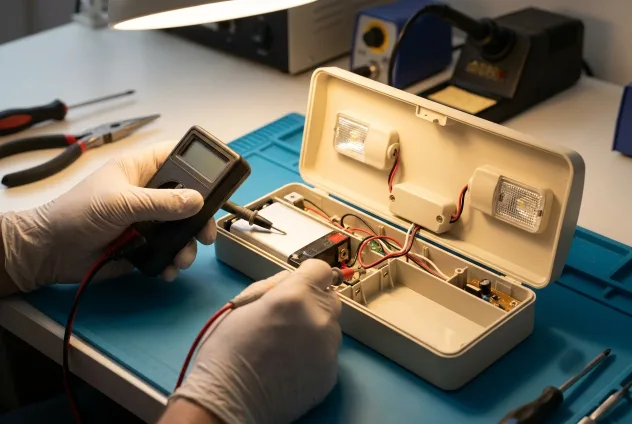
The monthly function test (owner side)
Every month, the units get a brief function test — roughly 30 seconds — to confirm they switch on and illuminate when power is cut. This one typically falls to the building’s own staff, because it is quick and frequent, and many buildings log it on a simple sheet by the panel.
The annual full-duration test (service side)
Once a year, the units get a full-duration test: they must stay lit for their full rated runtime, commonly 90 minutes, on battery alone. This is the test that proves the batteries will actually last through an evacuation, and it is the one a service record is built around.
Self-testing units
Some fixtures self-test and log their own results. Where those are installed, the monthly and annual checks can be read off the unit’s own diagnostics rather than run by hand. Confirm what your authority accepts as evidence.
Keeping the two records straight
The value in separating them is honesty: the annual test is the dated, professional record; the monthly checks stay with the owner. Mixing them up is how a register ends up claiming more than was actually done.
Cadences vary by jurisdiction — verify with your AHJ.
Frequently Asked Questions
- How often must emergency and exit lighting be tested?
- Under NFPA 101, a monthly function test of roughly 30 seconds and an annual full-duration test — commonly 90 minutes on battery alone. The annual test proves the batteries last through an evacuation.
- Who runs the monthly test?
- The monthly 30-second function test typically falls to the building owner or staff, because it is quick and frequent. The annual full-duration test is the professional, dated record.
Cadences vary by jurisdiction — verify with your AHJ.
Run the whole route in one place
GaugeRoute keeps every asset on its NFPA-keyed schedule, the inspection on the record, and the billing on your own rails. Free to start.